
The Ontology Imperative
Building Trustworthy Agentic AI
Your board approved AI agents. They no longer just answer questions; they take actions, moving money, changing settings, sending messages, on their own and faster than anyone can review, and the organisation is fully liable for what they do.
Three questions, before the next one goes live.
Can you say exactly what an agent is allowed to do, and who approved it?
Once it is live, who can halt it in seconds, without convening a committee?
After it acts, can you reconstruct what it was authorised to do, or only read the logs once the damage is done?
If the answer to any of these is no, you don't have governance. You have hope.
Accuracy is not the issue. These systems work by prediction, not fixed rules, so even an agent working from perfect data can act outside what it was ever allowed to do. The missing piece is not a better model; it is control over the meaning your agents reason from, in an open form you own rather than rent inside a vendor's platform. That open, owned model of meaning is the ontology this series argues for, and the governance layer most organisations are skipping while they build liability at scale.
The series publishes as deep-dive articles on Substack, synthesised from a 42-post LinkedIn series running from November 2025 through May 2026. The reference artefacts are in the library, and the work continues in the CDO Playbook. Start with the one-page board brief.
The Structure
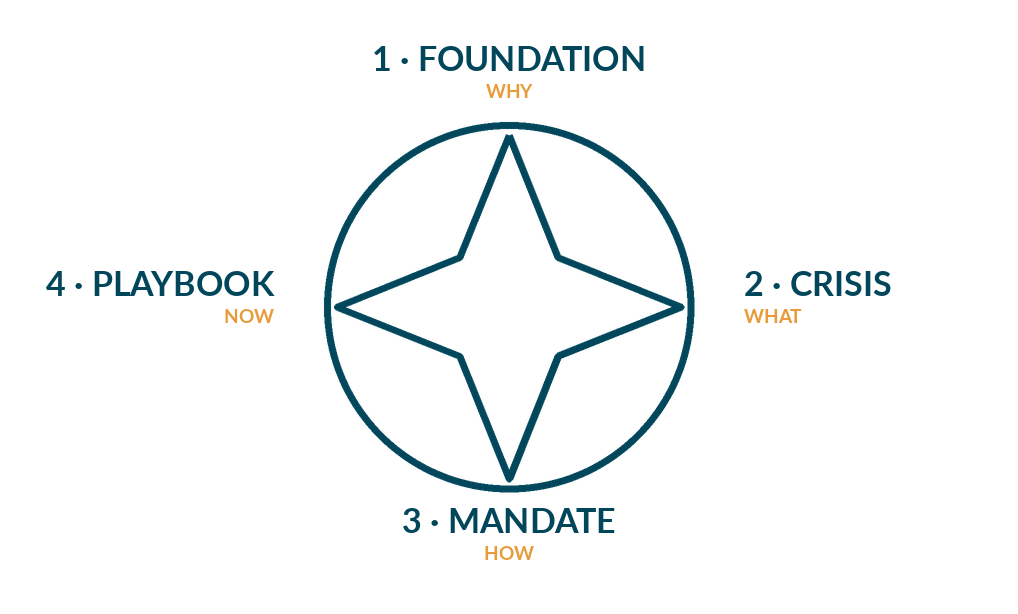
Three parts form the argument: Foundation, Crisis, Mandate. The Playbook carries it into practice.
The Series
Nine articles across three parts. Each opens on Substack.
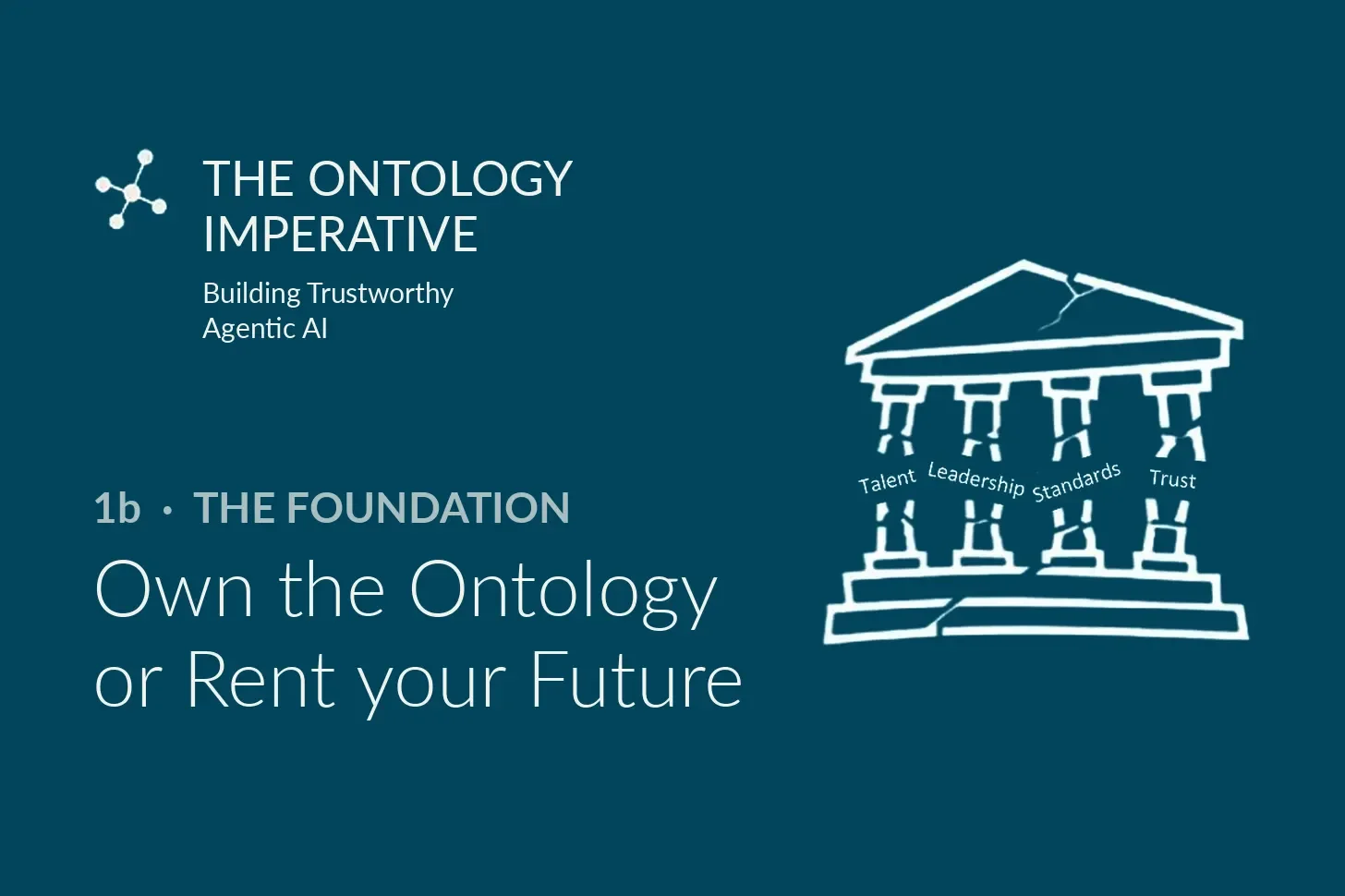
Board briefing, the Agentic AI Capability Stack™, and the governance diagnostics.
The Reference Library

Follow on LinkedIn
Follow the series on LinkedIn